
-
Featured services
-
Services
Alle Services und Produkte anzeigenNutzen Sie unsere Fähigkeiten, um die Transformation Ihres Unternehmens zu beschleunigen.
-
Services
Network-Services
Beliebte Produkte
-
Services
Cloud
Beliebte Produkte
-
Services
Consulting
-
Edge as a Service
-
Services
Data und Artificial Intelligence
- KI und intelligente Lösungen
- Daten-/KI-Strategie und -Programm
- Data Engineering und Plattformen
- Daten-Governance und -management
- Datenvisualisierung und Entscheidungsfindung
- $name
- GenAI Platforms
- GenAI Industry Services
- GenAI Infrastructure Services
- GenAI Value Transformation
- Data und Artificial Intelligence
-
-
Services
Global Data Centers
-
Beliebte Produkte
-
Services
Application Services
-
Services
Sustainability Services
-
Services
Digital Workplace
-
Services
Business Process Services
-
Services
Generative AI
-
Services
Cybersecurity
-
Services
Enterprise Application Platforms
![]()
IDC MarketScape: Anbieterbewertung für Rechenzentrumsservices weltweit 2023
Holen Sie sich den IDC MarketScape -
-
Erkenntnisse
Einblicke und RessourcenErfahren Sie, wie die Technologie Unternehmen, die Industrie und die Gesellschaft prägt.
-
Erkenntnisse
Ausgewählte Einblicke
-
Die Zukunft des Networking
-
Using the cloud to cut costs needs the right approach
When organizations focus on transformation, a move to the cloud can deliver cost savings – but they often need expert advice to help them along their journey
-
So funktioniert Zero-Trust-Sicherheit für Ihr Unternehmen
Sorgen Sie dafür, dass Zero-Trust-Sicherheit für Ihr Unternehmen in hybriden Arbeitsumgebungen funktioniert.
-
-
Erkenntnisse
-
-
Erfahren Sie, wie wir Ihre Geschäftstransformation beschleunigen können
-
Über uns
Neueste Kundenberichte
-
Liantis
Im Laufe der Zeit hatte Liantis, ein etabliertes HR-Unternehmen in Belgien, Dateninseln und isolierte Lösungen als Teil seines Legacysystems aufgebaut.
-
Randstad
We ensured that Randstad’s migration to Genesys Cloud CX had no impact on availability, ensuring an exceptional user experience for clients and talent.
-
-
-
- Karriere


Contents
Innovation needs power: Why sustainability is now an operational imperative
Topics in this article
For years, sustainability in IT has meant one thing: reporting. However, carbon disclosures and annual environmental, social and governance reports based on data that’s six to 12 months old may be necessary but are rarely transformational.
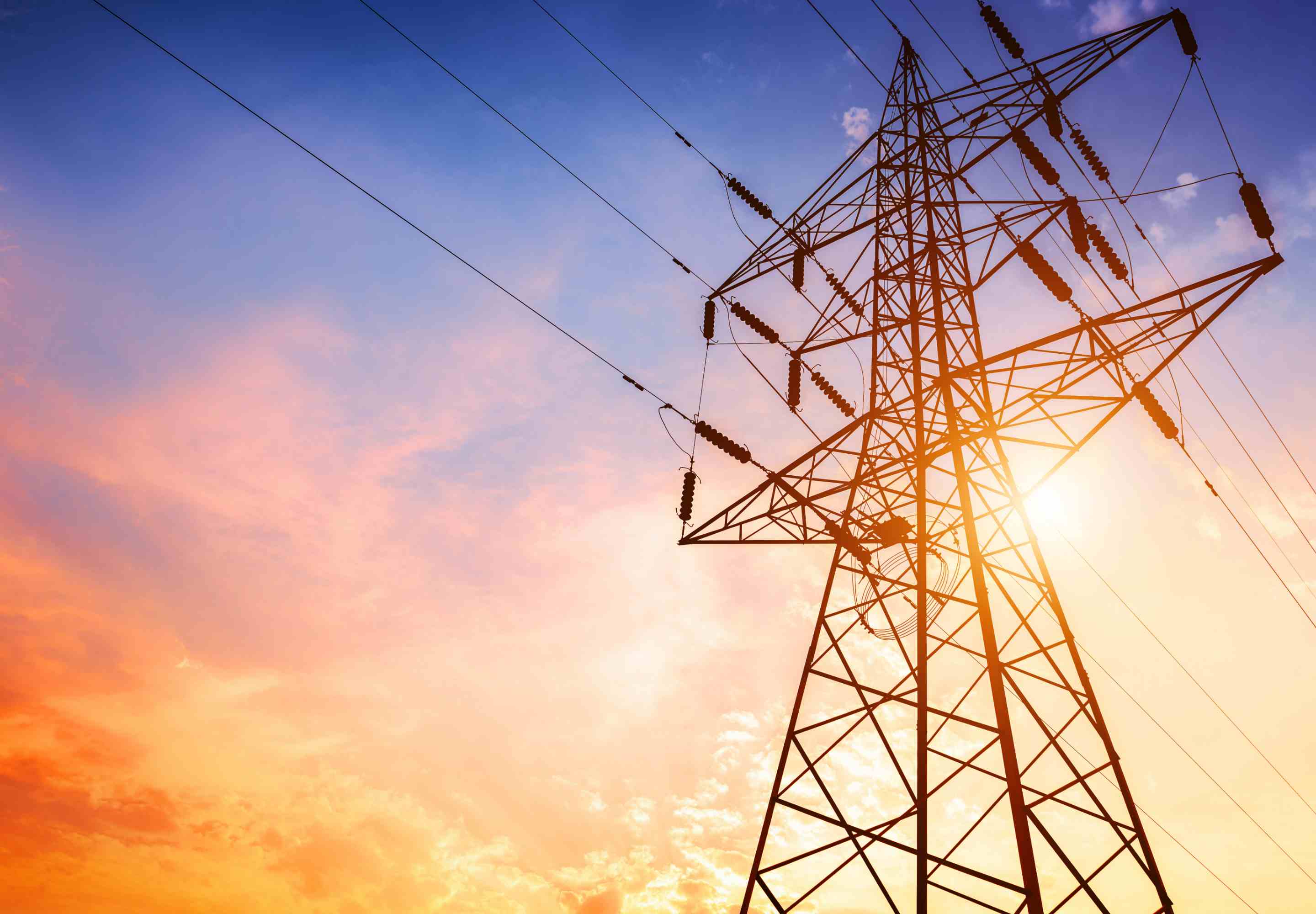
Now, the lines between technology innovation and sustainability are starting to overlap in a very real way. The technologies that are driving digital transformation — cloud, AI and intelligent networks — are also directly affecting energy demand and grid stability.
This is transforming sustainability from a compliance exercise into a performance and resilience issue, and it’s happening faster than many organizations expected.
There is no cloud or AI without energy
We often talk about AI algorithms, models and inference as if these were abstract topics. But AI is physical. It runs in data centers, consumes electricity and needs cooling systems, network equipment, servers and storage. It powers electronics built from critical minerals and rare earth elements.
Simply put, it would not exist without energy — and neither would the cloud.
The International Energy Agency projects that global electricity demand from data centers will more than double by 2030, with AI-optimized data centers expected to more than quadruple their electricity demand in the same period.
Goldman Sachs Research estimates data center power demand could rise by around 175% by 2030 compared with 2023 levels, and in Ireland, data centers have accounted for close to a quarter of national electricity consumption in recent years.
This isn’t a distant, theoretical challenge. Grid operators are already flagging it as a material reliability concern. Regulators are tightening permitting requirements, and utilities are scrutinizing grid connection requests.
Energy has become an obvious constraint, and when this happens, sustainability becomes an operational challenge.
What comes after net-zero reporting?
Across the market, organizations are confident about hitting their net-zero goals for Scope 1 and 2 by switching to renewables.
But the fact is, there won’t be enough renewable energy by 2030 to satisfy every corporate commitment. Optimism must therefore give way to action.
At NTT DATA, we believe sustainability should mean optimization — reducing organizations’ costs, carbon impact, energy consumption and dependence on rare earth materials. This calls for a shift from static annual reports to dynamic operational insight.
For example, our ICT Carbon Calculator — aligned to GHG Protocol standards and providing baseline visibility and reduction pathways, including integration with Cisco’s product carbon footprint data — is designed for both simplified reporting and ongoing infrastructure optimization. Yet, it’s only the starting point. The real value begins when insight drives optimization, because without visibility of what’s running, where it’s running and what it’s consuming, you cannot govern cost, carbon footprint or energy resilience.
And in an AI-driven world where cloud buying behavior has normalized overconsumption and corporate teams often spin up workloads as if they’re free, that visibility gap quickly becomes expensive — both financially and environmentally.
Sustainability has become a system-level conversation connecting AI demand growth, grid constraints, rare earth mineral concentration and even geopolitical exposure. Technology decisions must go beyond performance to also consider energy availability and carbon intensity.
In this world, optimization becomes operational when carbon and energy insights are embedded alongside financial and infrastructure controls.
A 30-year partnership, evolving for a more sustainable world
For more than 30 years, NTT DATA and Cisco have partnered to help organizations modernize securely and at scale.
NTT DATA contributes end-to-end expertise across cloud, AI, sustainability and more, integrating strategy, platforms, lifecycle management and optimization. Cisco provides the innovative, reliable infrastructure that makes it all possible.
Now, our partnership is extending into exciting new territory as Cisco explores “energy networking” — embedding energy management capabilities and application programming interfaces across a network to turn it into a control plane for energy measurement, monitoring and management.
Customers can then use these real-time energy insights to optimize their energy consumption and lower emissions and costs.
Learn more at Mobile World Congress Barcelona
Imagine a future where networks connect workloads but also help balance energy sources and grid demand in real time. That is where innovation and sustainability truly converge, and it’s where NTT DATA and Cisco want to be — turning sustainability into a performance engine driven by visibility, telemetry, automation and system-level optimization.
At the 2026 edition of the Mobile World Congress, taking place in Barcelona in March, we’re presenting keynote addresses, roundtable discussions and hands-on demonstrations that showcase innovation for a more sustainable future — including through the use of AI, networks and photonics.
→ View NTT DATA’s full program at MWC 2026
We know the future of innovation depends on how intelligently we power it. Join us in Spain to learn how we can make you part of that future.



.svg?rev=774d9d770375429b87fbcd2c5861bf3f)