
-
Featured services
-
Services
Alle Services und Produkte anzeigenNutzen Sie unsere Fähigkeiten, um die Transformation Ihres Unternehmens zu beschleunigen.
-
Services
Network-Services
Beliebte Produkte
-
Services
Cloud
Beliebte Produkte
-
Services
Consulting
-
Edge as a Service
-
Services
Data und Artificial Intelligence
- KI und intelligente Lösungen
- Daten-/KI-Strategie und -Programm
- Data Engineering und Plattformen
- Daten-Governance und -management
- Datenvisualisierung und Entscheidungsfindung
- $name
- GenAI Platforms
- GenAI Industry Services
- GenAI Infrastructure Services
- GenAI Value Transformation
- Data und Artificial Intelligence
-
-
Services
Global Data Centers
-
Beliebte Produkte
-
Services
Application Services
-
Services
Sustainability Services
-
Services
Digital Workplace
-
Services
Business Process Services
-
Services
Generative AI
-
Services
Cybersecurity
-
Services
Enterprise Application Platforms
![]()
IDC MarketScape: Anbieterbewertung für Rechenzentrumsservices weltweit 2023
Holen Sie sich den IDC MarketScape -
-
Erkenntnisse
Einblicke und RessourcenErfahren Sie, wie die Technologie Unternehmen, die Industrie und die Gesellschaft prägt.
-
Erkenntnisse
Ausgewählte Einblicke
-
Die Zukunft des Networking
-
Using the cloud to cut costs needs the right approach
When organizations focus on transformation, a move to the cloud can deliver cost savings – but they often need expert advice to help them along their journey
-
So funktioniert Zero-Trust-Sicherheit für Ihr Unternehmen
Sorgen Sie dafür, dass Zero-Trust-Sicherheit für Ihr Unternehmen in hybriden Arbeitsumgebungen funktioniert.
-
-
Erkenntnisse
-
-
Erfahren Sie, wie wir Ihre Geschäftstransformation beschleunigen können
-
Über uns
Neueste Kundenberichte
-
Liantis
Im Laufe der Zeit hatte Liantis, ein etabliertes HR-Unternehmen in Belgien, Dateninseln und isolierte Lösungen als Teil seines Legacysystems aufgebaut.
-
Randstad
We ensured that Randstad’s migration to Genesys Cloud CX had no impact on availability, ensuring an exceptional user experience for clients and talent.
-
-
-
- Karriere


From AI ambition to real impact: Why infrastructure makes the difference
As organizations move beyond AI experimentation, the real differentiator is infrastructure — determining whether ambition translates into scalable impact

Contents
From AI ambition to real impact: Why infrastructure makes the difference

Topics in this article
The best part of my week is when I spend time with our clients. Those are the conversations that give me the clearest view of what’s really happening on the ground — the ideas that excite them, their ambitions for their organizations and the reality checks that come with trying to turn those ideas into something real.
As I reflect on a week at this year’s European edition of Cisco Live, held in Amsterdam, these were the conversations I had in abundance.
I loved hearing about the innovative use cases our clients are exploring, but I was equally interested in understanding the roadblocks they’re facing. What is keeping a promising idea from moving beyond a pilot? What’s slowing progress when the business is ready to move faster? For me, that’s where the true value of partnership is unlocked — in bridging the gap between aspiration and execution.
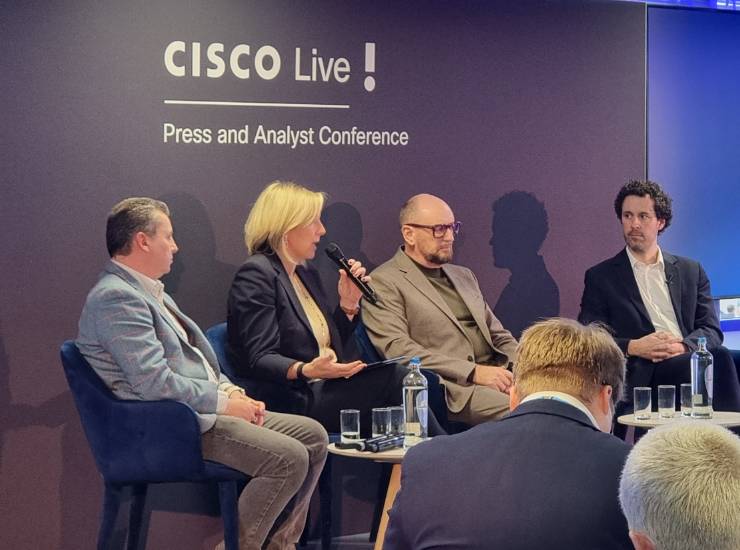
In conversation at Cisco Live 2026
It won’t surprise anyone reading this article that AI has been at the heart of almost every client conversation I’ve had in recent months. From retailers exploring how AI can transform demand forecasting and personalize customer experiences at scale to insurers looking to automate complex decision-making while strengthening risk and compliance, the message is consistent: Organizations clearly understand the potential of AI. After a year of experimentation and pilot projects, many now focus on building and executing roadmaps to deploy AI at scale.
What’s equally clear is that they are running into some fundamental challenges.
When ambition meets reality: The infrastructure imperative
As clients move from proof of concept to production, many are discovering that the limitations they face are not unique to their organization. The infrastructure bottlenecks holding back AI performance are remarkably universal — a theme that came through strongly in my conversations with clients and partners during Cisco Live.
In practice, these challenges tend to show up across several dimensions at once:
- Architecture models designed for centralized, predictable workloads struggle in a world where AI decisions need to happen closer to where data is created.
- Networks that were perfectly adequate for email, transactions and video are suddenly under strain from constant, high-volume, latency-sensitive AI traffic.
- Traditional security approaches, built around clear perimeters, are no longer fit for environments where users, devices, data and models are everywhere.
- Data and storage architectures often can’t keep pace, leaving expensive computing resources underused as they wait for data.
- Service models optimized for stability and break/fix support are ill-suited to AI systems that are constantly evolving and need to be managed as living platforms, not static assets.
Individually, none of these issues will sound unfamiliar to IT leaders. Together, they explain why so many AI initiatives struggle to scale beyond early success.
Knowing what to fix is one thing; knowing how to fix it is another
Clients often tell me that while these bottlenecks are increasingly well understood, the path to removing them is far less clear. Infrastructure modernization for AI isn’t a single upgrade or a one-off project. It requires thoughtful, phased change across architecture, networking, security, data and operations — often while keeping the business running and being mindful of cost, risk and ROI.
Just as importantly, this is not about ripping everything out and starting again. Most organizations have years of investment in their existing environments, and the challenge is how to evolve those foundations responsibly. Clients want to know how to prioritize the changes that will unlock the most value from AI without overextending budgets or creating unnecessary disruption.
That uncertainty is why many are looking for guidance as much as technology.
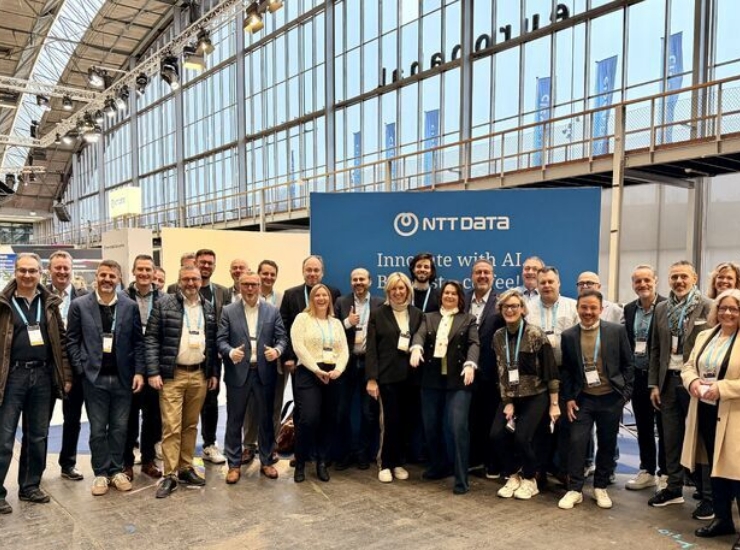
Our team on the ground at Cisco Live 2026
A safe pair of hands for the AI journey
I’m hearing a consistent request: Organizations want a partner ecosystem they can trust to guide them to where they want to be with AI.
Our strength lies in the breadth of our capabilities — not because every challenge needs to be solved by a single provider, but because that breadth gives us context. By understanding AI at the application, process and change-management layers, as well as the infrastructure required to support it, we can help clients see how the different pieces of an AI implementation fit together. That perspective allows us to design pragmatic roadmaps, make informed trade-offs and work effectively alongside our clients’ existing teams and partners.
This is an approach we’ve refined over more than 35 years of partnership with Cisco. Together, we’ve supported clients through multiple waves of technological change, from early networking and data center transformation to cloud, security and now AI. That shared history matters. It means we understand the difference between short-term upgrades and long-term foundations, and we know how to help organizations evolve without losing momentum.
As clients embark on this next, exciting chapter with AI, our role is to help them move forward with confidence, and to support responsible deployment at scale. We ensure security, resilience and sustainability are built in from the start, and we’re a steady, trusted presence as ambitions turn into outcomes.
Those are the conversations I’m having every week. They’re a powerful reminder that while AI may be the headline, it’s the combination of ambition, infrastructure and enduring partnership that ultimately determines success.



.svg?rev=774d9d770375429b87fbcd2c5861bf3f)